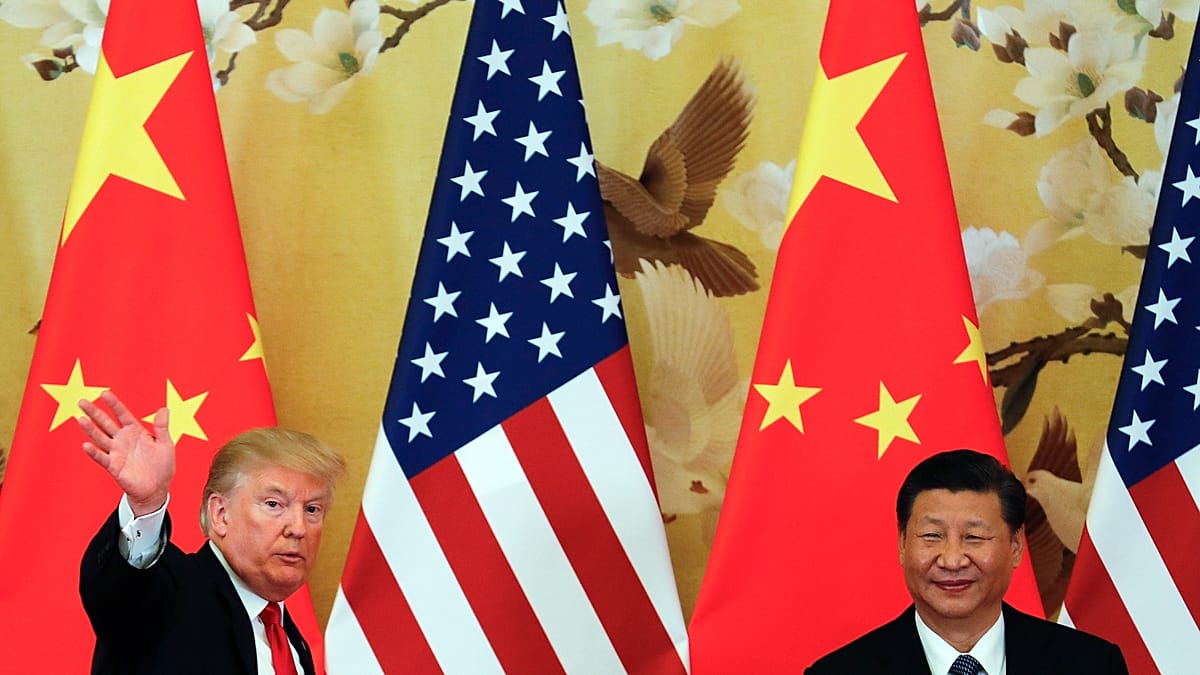
Real-time US stock news flow and impact analysis to understand how current events affect your portfolio holdings. Our news aggregation system filters through thousands of sources to bring you the most relevant information quickly. US President Donald Trump’s visit to Beijing this week highlights the intensifying economic competition between the world’s two largest economies. The trip comes as both nations vie for leadership in technology, trade, and global influence, with markets closely watching for potential policy shifts.
Live News
- The visit marks one of the highest-level engagements between the two economies in recent years, highlighting the centrality of economic diplomacy amid ongoing tensions.
- Key discussion points are likely to include trade imbalances, technology transfer rules, and the competitive landscape for emerging industries such as electric vehicles, 5G networks, and clean energy.
- Both nations continue to vie for leadership in global economic institutions and standard-setting bodies, a dynamic that influences investment flows and regulatory frameworks worldwide.
- The rivalry has accelerated efforts by companies in both countries to diversify supply chains and reduce dependency on each other’s markets, a trend with potential implications for manufacturing and logistics sectors.
- Financial markets are monitoring the visit for any announcements that might alter the tariff landscape or affect bilateral trade volumes, though concrete outcomes remain uncertain at this stage.
Trump in Beijing: US-China Economic Rivalry Intensifies Amid Trade and Tech TensionsDiversifying the type of data analyzed can reduce exposure to blind spots. For instance, tracking both futures and energy markets alongside equities can provide a more complete picture of potential market catalysts.Some investors rely heavily on automated tools and alerts to capture market opportunities. While technology can help speed up responses, human judgment remains necessary. Reviewing signals critically and considering broader market conditions helps prevent overreactions to minor fluctuations.Trump in Beijing: US-China Economic Rivalry Intensifies Amid Trade and Tech TensionsThe integration of multiple datasets enables investors to see patterns that might not be visible in isolation. Cross-referencing information improves analytical depth.
Key Highlights
US President Donald Trump’s current visit to China underscores the deepening rivalry between the United States and the People’s Republic of China, two economic superpowers whose competition now extends well beyond trade balances. The visit, taking place this week in Beijing, arrives at a time when bilateral relations are increasingly defined by a contest for technological supremacy, supply chain dominance, and global economic sway.
The meeting between Trump and Chinese leaders is expected to address a range of topics, including tariffs, intellectual property protections, and the future of advanced industries such as semiconductors and artificial intelligence. Both nations have invested heavily in these sectors, and their competing visions for global standards and market access are shaping the broader economic landscape.
Observers note that the rivalry has evolved from a focus on traditional trade deficits to a more complex struggle over innovation and strategic influence. The US has implemented export controls and investment restrictions targeting Chinese technology firms, while China has accelerated efforts to achieve self-reliance in key technologies through state-backed initiatives.
The visit also takes place against a backdrop of shifting alliances, with both countries seeking to expand their economic partnerships in regions such as Southeast Asia, Europe, and Africa. The outcome of this week’s talks could signal the direction of future economic policies and may affect global supply chains, currency markets, and trade flows.
Trump in Beijing: US-China Economic Rivalry Intensifies Amid Trade and Tech TensionsAlerts help investors monitor critical levels without constant screen time. They provide convenience while maintaining responsiveness.Observing correlations across asset classes can improve hedging strategies. Traders may adjust positions in one market to offset risk in another.Trump in Beijing: US-China Economic Rivalry Intensifies Amid Trade and Tech TensionsSome investors track short-term indicators to complement long-term strategies. The combination offers insights into immediate market shifts and overarching trends.
Expert Insights
The economic comparison between the US and China reflects fundamental differences in their growth models, governance structures, and strategic priorities. Analysts suggest that while the US maintains advantages in financial depth, innovation ecosystems, and rule-of-law frameworks, China’s strengths lie in manufacturing scale, infrastructure investment, and state-led industrial policy.
Trade tensions between the two economies have persisted for years, with periodic escalations and pauses creating an unpredictable environment for global businesses. The current visit may provide opportunities for dialogue, but structural disagreements—particularly over technology access and market reciprocity—are unlikely to be resolved in a single meeting.
Market participants should consider the potential for policy shifts in areas such as semiconductor export controls, data governance, and investment screening mechanisms. Any changes could have ripple effects across cross-border mergers, supply chain logistics, and sector-specific valuations.
The broader context suggests that the US-China economic rivalry is a multi-decade phenomenon that will continue to shape investment themes in technology, manufacturing, and commodities. Investors are advised to monitor policy developments closely, but near-term market reactions to diplomatic events may be muted without concrete agreements. As both nations pursue their economic interests, the path forward appears marked by both competition and occasional cooperation.
Trump in Beijing: US-China Economic Rivalry Intensifies Amid Trade and Tech TensionsInvestor psychology plays a pivotal role in market outcomes. Herd behavior, overconfidence, and loss aversion often drive price swings that deviate from fundamental values. Recognizing these behavioral patterns allows experienced traders to capitalize on mispricings while maintaining a disciplined approach.Diversifying data sources can help reduce bias in analysis. Relying on a single perspective may lead to incomplete or misleading conclusions.Trump in Beijing: US-China Economic Rivalry Intensifies Amid Trade and Tech TensionsThe availability of real-time information has increased competition among market participants. Faster access to data can provide a temporary advantage.